


Home » Usage + Visit » Subject-Specific Services » Subject Information » Islamic/Arabic Studies
Subject Information
Islamic/Arabic Studies
Overview
Contact
This link takes you to a list of all the subjects this person is responsible for.
Here you will find the contact details of the person mentioned above.
This link takes you to a list of all the subjects this person is responsible for.
Here you will find the contact details of the person mentioned above.
Library Holdings and Acquisitions
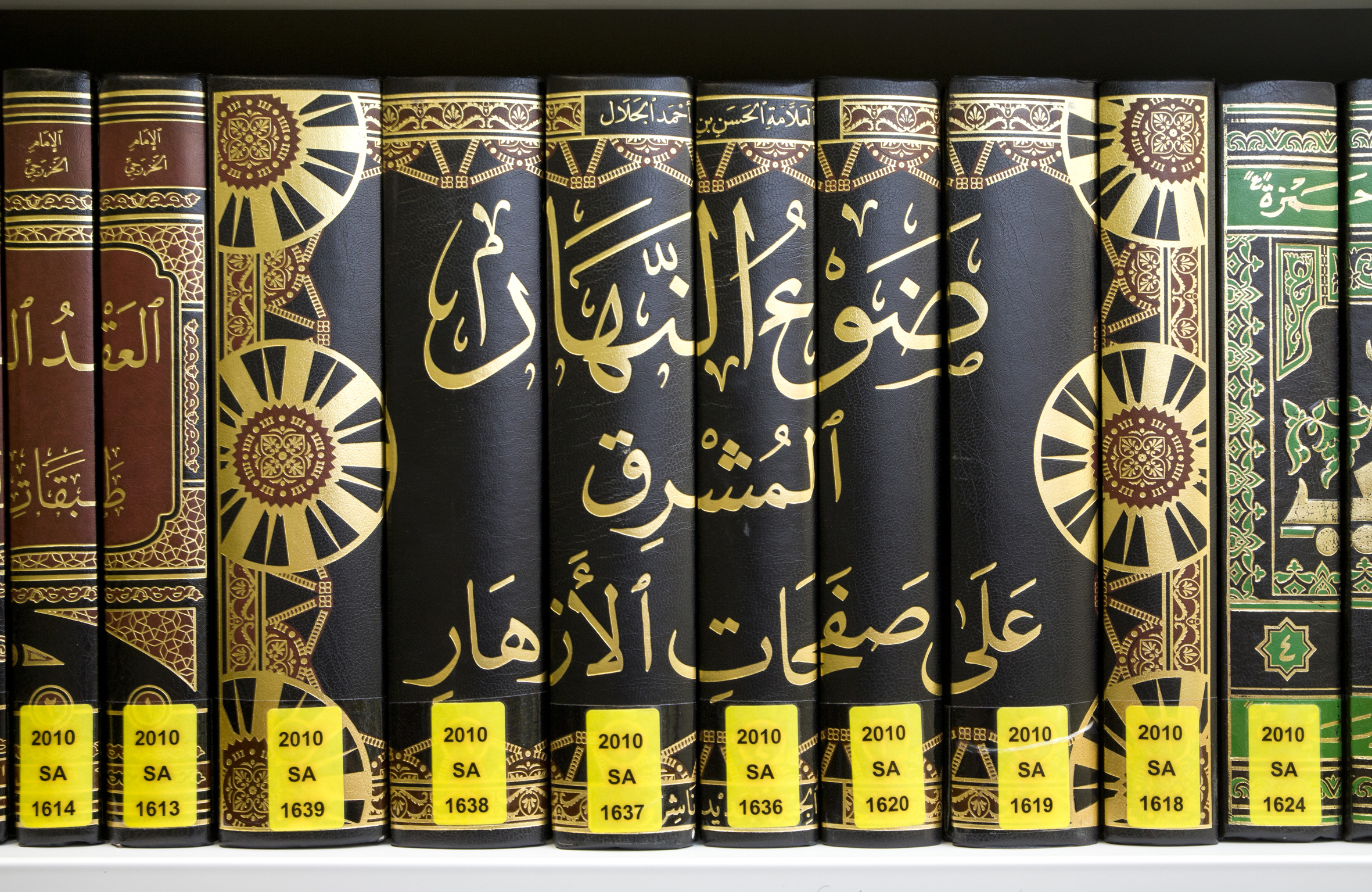
Including the holdings of the Department of Arabic and Islamic Studies, the DMG library, and the acquisitions of the SSG and the FID, the University and State Library has been able to build up one of the largest and most comprehensive collections on the so-called MENA region and Islam. The focus Originally, the focus was on linguistics and literary studies, as well as religious studies, but since 1998, humanities and social sciences relating to the Middle East and North Africa region have also been included.
In addition to printed works (the majority of which are in the languages of the MENA region), the ULB also provides access to numerous electronic resources via open access.
Gaps in the holdings of Western secondary literature, dating from the period between 1945 and 1990, are being systematically filled where they prove to be of particular importance for current teaching and research. The current collection priorities are aligned with the prevailing profile of university teaching and also include recently published Western secondary literature. Teaching and introductory works are available in German or English. The FID, on the other hand, mainly acquires literature written in the languages of the MENA region.
Finding and Using
Titles relating to Arabic and Islamic studies are mainly located on the shelves at the Middle East/Ethnology Branch Library and therefore have to be ordered via Ha:lit. When searching for titles in non-Latin scripts, please be aware of the transcription regulations applied within the German library system. The lending of requested media takes place at the circulation desk of the Steintor Campus Branch Library. With a few exceptions, the items in the collection may be borrowed freely. In addition, there is a section containing general reference works and dictionaries, which are shelved in the reading room of the Middle East Branch Library / Ethnology.
Website of the FID Middle East, North Africa and Islamic Studies
The subject portal Menalib provides an overview of the various services offered by the FID, as well as research access points for printed and electronically available works on Arabic, Middle Eastern and Islamic Studies acquired by the FID.
Consultancy and Training Services
Library induction sessions, training courses on literature research and literature management systems, as well as consultations on publication strategies and research data management, are held at regular intervals.
Collection of subject-related links
Journals relating to Islamic Studies that are available electronically are indexed in the Electronic Journals Library (EZB).
Journals relating to Arabic Studies that are available electronically are indexed in the Electronic Journals Library (EZB).
There are numerous specialised databases available for researching information and literature on Arabic and Islamic Studies. These can be searched via the Database Information System (DBIS).
All databases, whether with unlimited or trial access, acquired by the FID, can be accessed via Menalib.
Please remember to activate the VPN connection when carrying out research outside the university’s Wi-Fi coverage area.
History and Characterisation of the Subject
The study of Oriental languages at MLU dates back to the university’s founding, although it is worth noting that Semitic languages, such as Hebrew, were predominantly taught to support biblical exegesis in theology until the 19th century. In the early 19th century, the then so-called field of Oriental Studies broke free from its close ties to theology and initially focused on the philological study of Semitic languages. Meanwhile, the Arabic language increasingly came to the fore. Due to the establishment of the Library of the German Oriental Society (DMG) In Halle, the collection of Arabic, Persian and Turkish literature grew considerably towards the end of the 19th century. After the renowned Semitist Carl Brockelmann was appointed to the Chair of Semitic Studies in 1910, the Oriental Seminar was officially established at the University of Halle in 1918. Today, the Institute of Oriental Studies comprises several departments, including the Department of Arabic and Islamic Studies, where teaching focuses not only on Arabic but also on Persian and Turkish. Since 1998, the seminar has benefited from the extensive acquisitions and services offered by the Special Subject Collection (SSG) Middle East incl. North Africa (1998–2015) as well as its successor, the Specialised Information Service (FID) for the Middle East, North Africa and Islamic Studies (since 2016), which is maintained by the ULB.